
By Martin Davis
EDITOR-IN-CHIEF
Email Martin
Fear is frequently partnered with Artificial Intelligence in the public imagination. Especially in the realm of education, where concerns are growing that using AI will deny students the critical thinking skills and so-called soft skills that are again in vogue with America’s largest companies.
As with any new tool in the education environment, however, it’s how the tool is deployed that either accentuates or debilitates a student’s intellectual development.
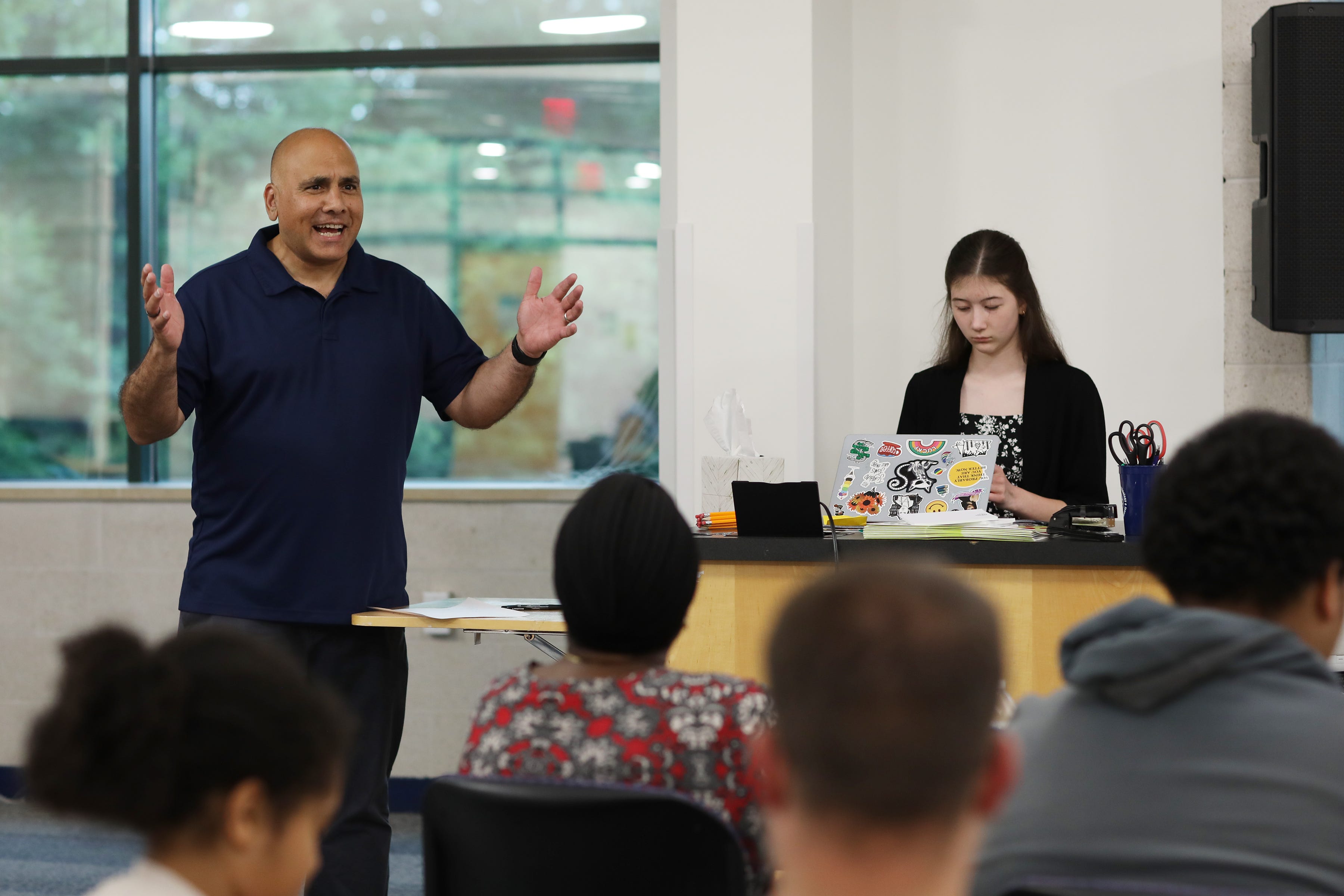
Tuesday evening at the Academy of Innovation & Technology at University of Mary Washington, a lab school made possible by changes introduced during the administration of then-Gov. Glenn Youngkin, attendees at the school’s first chatbot competition displayed a model wedding of critical thinking and soft skill growth.
The competition was the capstone project for a course designed to introduce students to AI and its uses. Designed by Dr. Anand Rao for students at the University of Mary Washington, it was modified by Rao for the 9th and 10 graders at AIT-UMW.
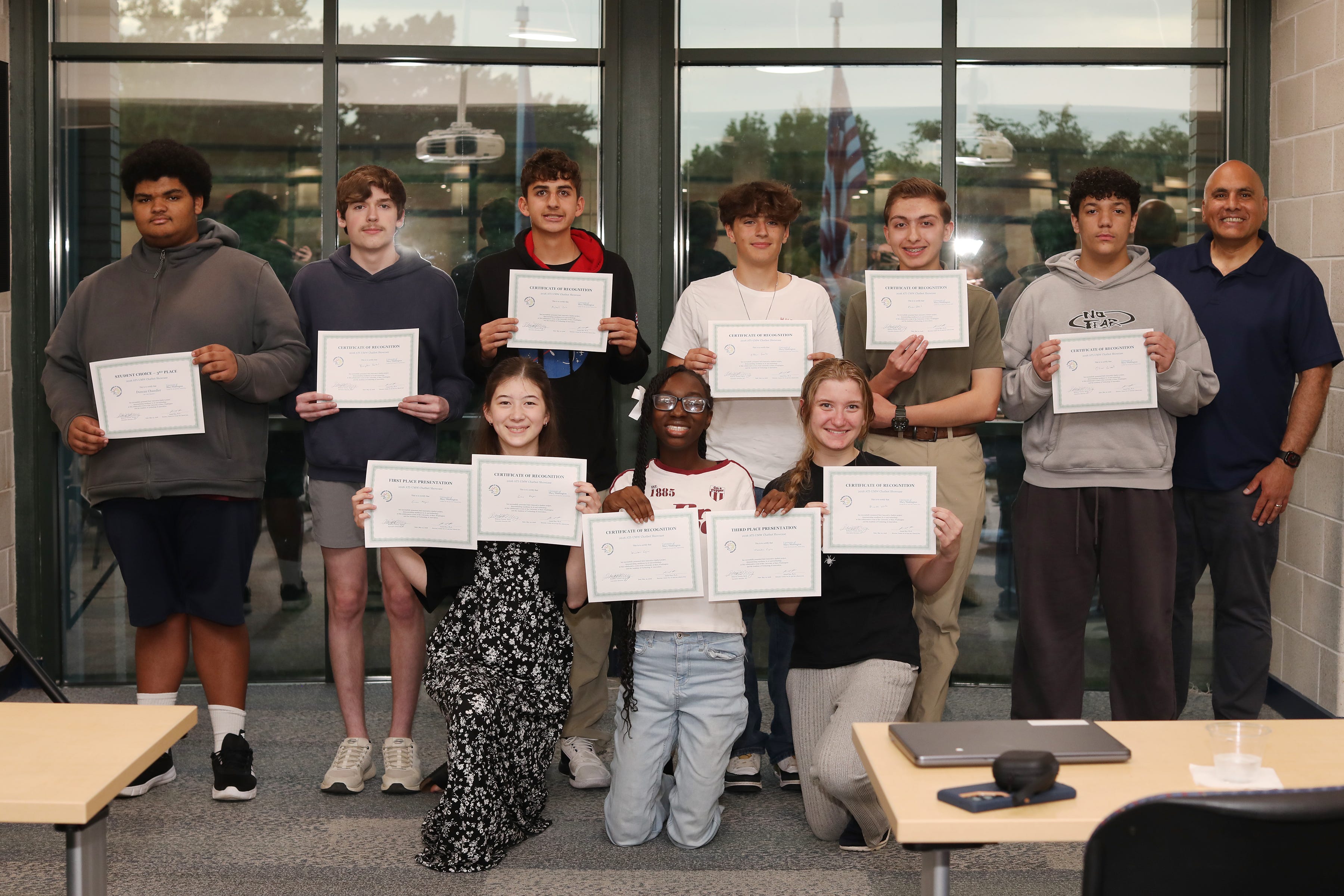
The competition challenged students to create and build an AI chatbot using PlayLab, a tool designed specifically for educators and students that allows them to build chatbots specific to the educational environment.
The tool comes with guardrails so that when students are working, educators are alerted when they stray into areas that may be of concern.
One student created a chatbot, for example, titled “Urgent Needs.” It is designed to give critical, accurate information in emergencies. For example, what should one do if a person has a heart attack? Or if a bomb were to go off nearby?
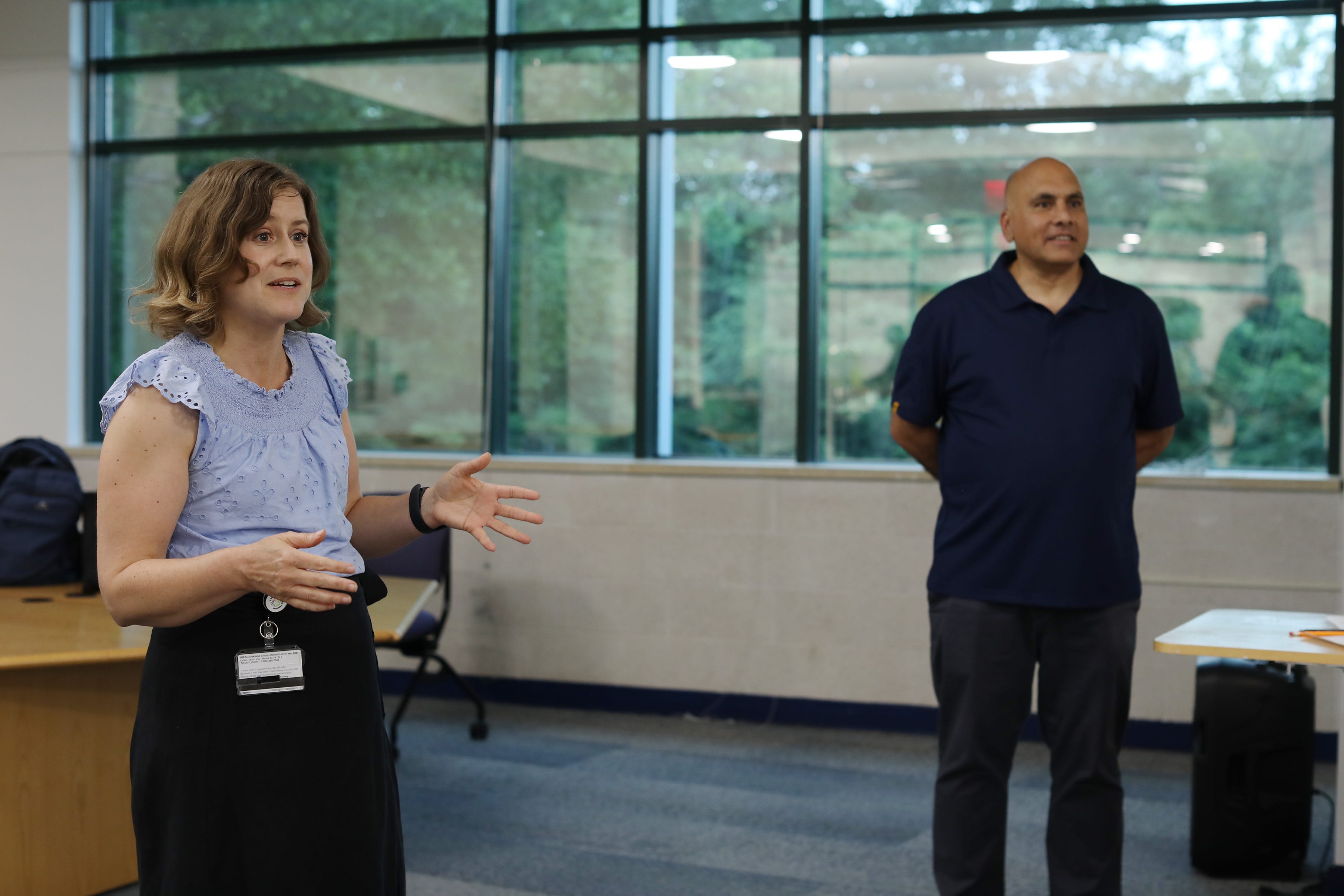
Rao noted that he knew the student was working hard because of a steady stream of alerts he received asking, “Is there are a concern that a high school student is working on ________?”
Though the remark elicited laughter from the audience and the students, it highlights the efficacy of PlayLab’s safety features, while ameliorating worries that students were just turned loose to experiment with AI.
Indeed, as good teachers do, the projects were supervised throughout. And students were required to not simply show their work, but analyze the strengths and weaknesses of the chatbots they were building.
One student created a “Weekly Schedule Maker,” designed to help students avoid procrastination and become more effective at time-management.
The chatbot operated by walking the user through a series of prompts before generating a schedule that the student could then use.
The benefits were quickly-created organized schedules that help students stay on track and reduce stress.
The creator also noted, however, that the tool had several flaws. The schedules that were produced sometimes offered unrealistic time frames for accomplishing tasks. They also could overwhelm the user by asking too many questions at a given time, a problem made clear during a demonstration of the tool when the chatbot generated a cascade of questions that one could see overwhelming the user.
Other students noted that the chatbots required multiple rounds of refinement to improve the desired outcomes. And one, who built a tool to help students’ understanding of math, noted problems with hallucinating — assuming facts about a problem that aren’t present — and occasionally making errors when grading the user’s work.
Fear may well drive some people’s understanding of AI. But these young students, under the watchful eye of talented instructors like Rao, are the embodiment of “being the human in the technology,” as Ethan Mollick wrote in his book Co-Intelligence.
And they will lead the way forward in the next great evolution of human experience.


Local Obituaries
To view local obituaries or to send a note to family and loved ones, please visit the link that follows.
