
By Phil Huber
GUEST COLUMNIST
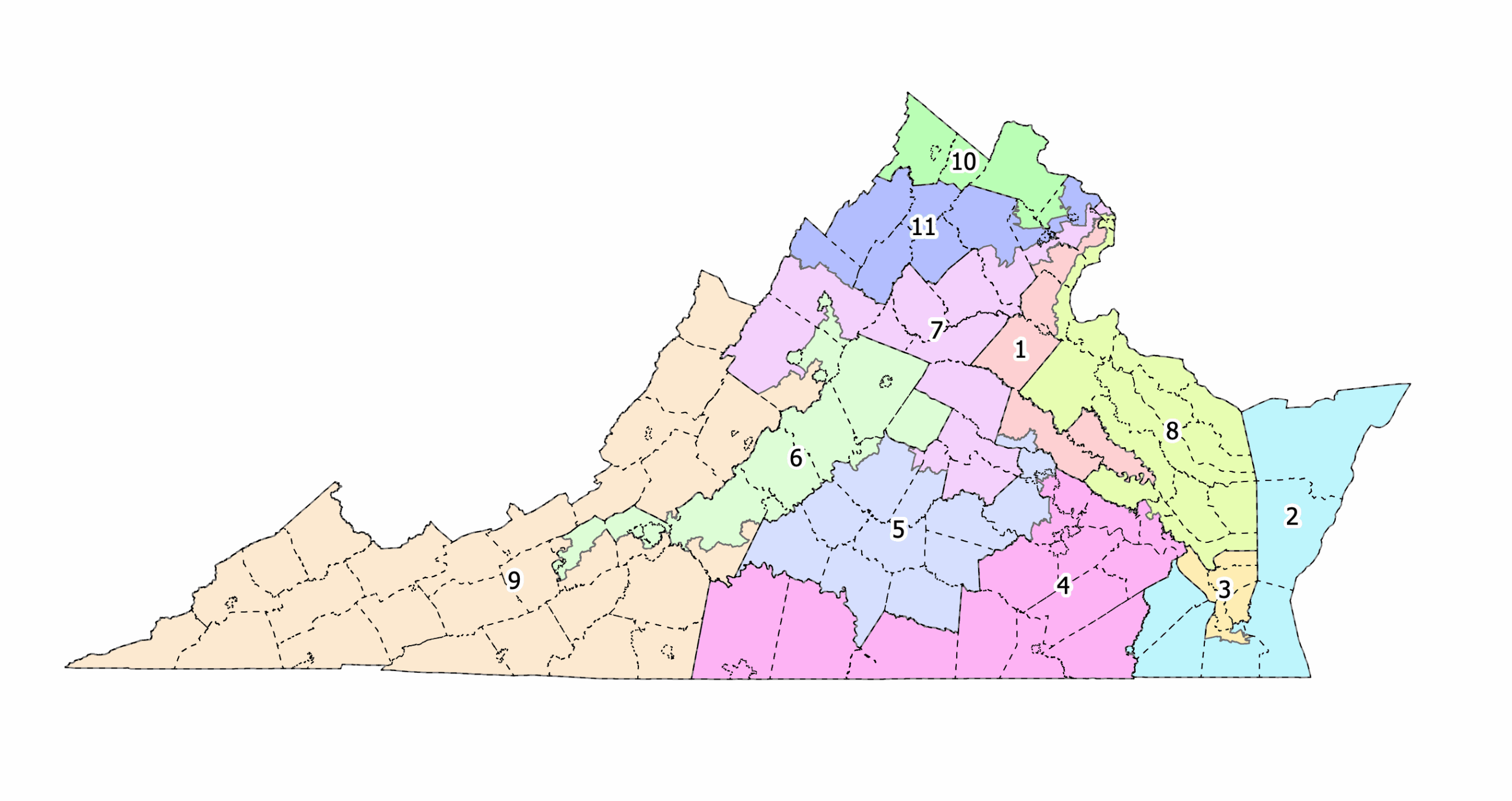
Virginia voters will soon face an unusual and important choice: whether to approve a temporary change to how our congressional districts are drawn. The Redistricting Amendment has sparked strong opinions, but many neighbors I speak with are still sorting out what it really does and why it matters. This decision deserves a careful look, not just partisan talking points.
To understand the debate, it helps to recall where we’ve been. In 2020, Virginians approved a reform that took the first crack at drawing new districts away from the General Assembly and gave that role to a bipartisan commission, with the state Supreme Court stepping in if the commission deadlocked. That system produced the current congressional map, which was used in 2022 and 2024. Many saw this as a step toward “fair maps” and less political manipulation.
The new amendment would not undo that reform permanently, but it would create a temporary exception. It would allow the General Assembly, for a limited period before the next census, to redraw Virginia’s congressional districts again. Supporters describe this as a one‑time adjustment in extraordinary national circumstances. Opponents see it as opening the door to the very kind of partisan gerrymandering voters thought they were curbing just a few years ago.
Those arguing “yes” make several main points. First, they note that other states have aggressively redrawn their maps mid‑decade in ways that favor one party. They worry that if Virginia alone sticks to a strict once‑a‑decade process, our voters may be under‑represented in a House of Representatives shaped by more extreme maps elsewhere. From this perspective, the amendment is about keeping Virginia from being disadvantaged in a national power struggle.
Second, supporters say this is a temporary tool, not a permanent power grab. The authority to redraw would expire after the next census, and any new map would still have to comply with the Constitution, the Voting Rights Act, and judicial review.
Supporters argue that the underlying principle of fair representation is more important than preserving a specific process in the face of changing conditions. In their view, this is an exception made in the name of fairness, not a rejection of fair maps.
Those leaning “no” raise serious concerns as well. Many remember the 2020 reform campaign, which promised to “take politicians out of redistricting” and give Virginians more confidence in the process. To them, allowing lawmakers to step back in—even temporarily—feels like going back on that promise. They ask: if we bend the rules when it seems advantageous now, what will stop future politicians from doing the same when the shoe is on the other foot?
Opponents also worry about trust. Redistricting is complicated, and most voters do not have time to study maps and legal standards. They rely on clear, stable rules. Changing those rules mid‑stream, even for reasons some may find understandable, risks deepening cynicism about politics. If people come to believe that district lines will always be rewritten whenever one side sees an opportunity, public faith in the system could erode further.
Reasonable people can see pieces of truth in both arguments. Virginia really is affected by what other states do, and the national stakes in congressional control are significant. At the same time, process and principle matter. If we say we value independent or bipartisan map‑drawing, we should be careful about exceptions that might weaken that commitment.
As the vote approaches, I would encourage Fredericksburg‑area readers to ask themselves two questions. First: do you believe the current national environment justifies giving our legislature a one‑time chance to adjust the map, under court oversight, in the name of balancing representation? Second: do you believe that preserving the new commission‑based system without exception is the better way to protect fairness in the long run, even if that means accepting whatever maps other states choose?
There is no perfectly “safe” option here. A “yes” vote takes a calculated risk that a temporary exception will serve fairness rather than undermine it. A “no” vote takes a different risk: that by sticking firmly to our process, we may accept a national playing field tilted by others. Whichever side you choose, the most important thing is to read the ballot language carefully, think through the trade‑offs, and make a considered decision.
On an issue this fundamental, Virginia needs not just turnout, but thoughtful participation.
Phil Huber lives in Fredericksburg.


Local Obituaries
To view local obituaries or to send a note to family and loved ones, please visit the link that follows.

One detail of the "temporary" redistricting that always gets left out, is that it will affect 3 (three) elections, not just one. 2026, 2028 and 2030 will all be affected by this "temporary" change. And just who will benefit from this "temporary" change? Exclusively the Democrats, both statewide and nationally. It puts them in total power and the Republicans will stand a snowball's chance in Hell of ever having a say in Virginia government, for the next 30 years. "Temporary" -- yeah, right.