
By Drew Gallagher, ADVANCE COLUMNIST
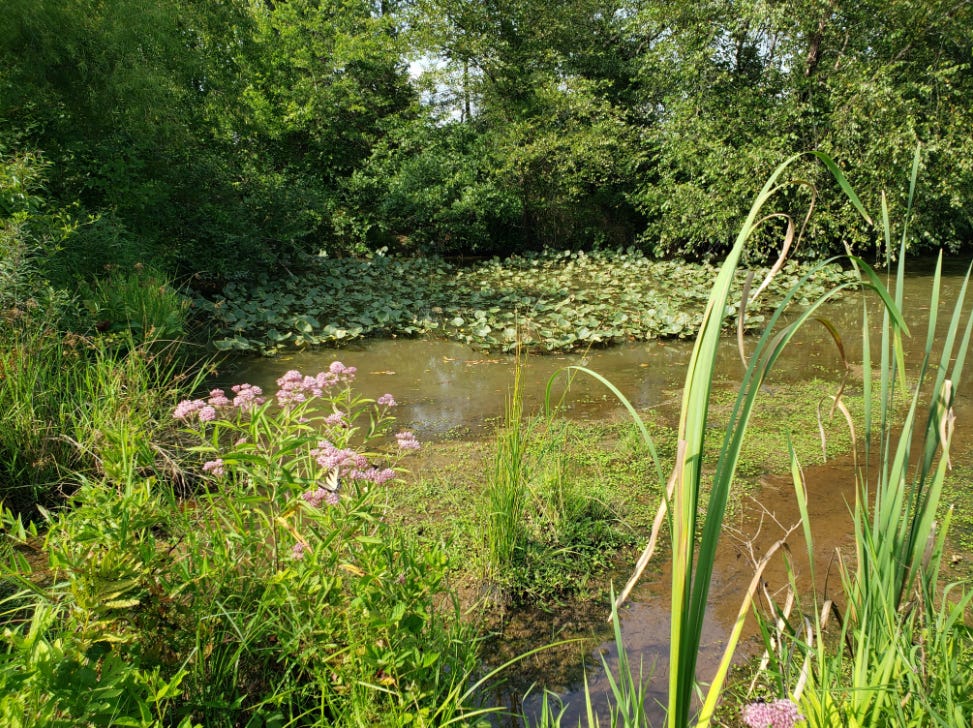
Stafford County again finds itself in the crosshairs of the data center debate. A Northern Virginia company approached the county at its July 7 Board of Supervisors meeting with a request to rezone 99 acres of land from agricultural to heavy industrial to build a data center near Potomac Creek.
The adverse effects of the rezoning and construction of the data center were outlined expertly by Jeff Eastland in The Advance last week and in Ranjit Singh’s Substack No Lines in Nature. Eastland’s concerns and the concerns of those who believe as he does that data centers pose more harm than good, are up against a county that has shown a willingness to sacrifice habitat for dollars in the endless shell game of maintaining amenities and infrastructure without raising money through taxes.
Fortunately for all, I’ve found a solution for Stafford County that will please both sides of the data center war: The Museum of Artificial History, or MOAH, pronounced how your cousin in Boston says Mower.
Unlike other online attempts at Museums of Artificial History, this one will have a brick-and-mortar presence at a location within Stafford County with easy access to I-95. What child can forget going to the Smithsonian’s Museum of Natural History and seeing the massive blue whale hanging from the ceiling? Or seeing Robin Williams star as Teddy Roosevelt at the museum in New York City?
Stafford County’s will have neither of those attractions because blue whales always got stuck under the bridge between Warsaw and Tappahannock and never made it to Falmouth, and neither Robin Williams nor Teddy Roosevelt ever visited Fredericksburg. But Stafford doesn’t need whales, or Rough Riders, or Morks, because the Museum of Artificial History will have its own impressive displays culled from heritage spots displaced by the recent and ongoing tsunami of construction and data centers.
In 2022, Stafford County greenlit the construction of a warehouse that displaced the historically significant Buzzard’s Roost, an outcropping of rock that featured graffiti etched into its face by bored Union soldiers during the Civil War. The county in its wisdom simply accommodated the warehouse builders by moving the rocks with the etchings to the Stafford Civil War Park on Mount Hope Church Road where the Union Army once camped out for the winter, leaving behind “3 earthen artillery fortifications, many winter hut holes, a Colonial bridge abutment and a corduroy road.”
Similarly, the new Potomac Creek data center project will require removal of a 200-year-old family cemetery that probably won’t fit in the Civil War Park, but would be a perfect installation in, say, a Museum of Artificial History!
I envision MOAH as Stafford’s answer to the Kalahari Resort in Spotsylvania—a water park named for a desert—but without the need for traffic circles or increased police presence. Many are convinced, based on things like evidence, that the Fredericksburg area’s willingness to allow data centers will be a drain on its waterways. But no problem, because MOAH can honor the legacies of Potomac Creek and the Rappahannock River with a state-of-the-art replica.
Kids have always loved dinosaurs, even if they never saw one in person until Barney started doing live shows again in 1991 after he got out of rehab. At MOAH, kids can experience what it was once like to float down the Rappahannock River just like Captain John Smith or a Mary Washington College student on an inner tube next to a cooler of beer.
MOAH’S Lazy River will wend its way past relocated installations of Buzzard’s Roost and the Seddon Family Cemetery, with stops at activity stations where creative children can produce grave rubbings or capture the excitement of seeing actual Civil War soldiers’ names scratched on rock in charcoal. Heck, maybe the county can even invest in fake headstones for the Seddon Family slaves, now buried in unmarked graves in the actual cemetery, so children of color can share in the joy of their white classmates.
After just one informative trip to MOAH, kids will no longer have to cross the Falmouth Bridge, ask their parents why there’s a bridge over dry land, and have the uncomfortable conversation about the difference between an aqueduct and a viaduct.
At the concession stand, kids can eat corn on the cob or pumpkin pie just like grandma used to make. The carousel will feature hay wagons and other long-forgotten farm machinery of the 20th Century that was sacrificed so the calculators on our phones can do square roots just a little faster.
And who knows what else might be displaced in the coming years as the data centers proliferate? Eagle and osprey habitats. Beavers and otters. All need water—or, in Stafford County, an ersatz Lazy River. It’s only a matter of time before sacred grounds of Native Americans are in the way of the bulldozers too. “Graveyards to Gigabytes” would look great on t-shirts. The possibilities at The Museum of Artificial History are only limited by the possibility that one day we may have enough data centers to figure out for themselves how to operate without any more nearby water sources.
But until that day arrives, you can wash away your troubles at MOAH’s Ark Log Flume. Right next to the “Two by Two” cell phone charging stations featuring statues of the displaced mammals and fish that will die trying to escape the historic Data Center flood that’s draining all the waterways of Central Virginia.

COMMUNITY FORUM #2: 'Show Up, Speak Up' on DATA CENTERS: Fredericksburg: Are We the New DATA CENTER Alley?' Wed, July 29. Downtown Library, 1201 Caroline St, 22401. Big, theater room. 6:30 - 7:45 PM. Free. Open to the Public.
'Tabling': DATA CENTER Basics 101; Area County DATA CENTER Activists; Chloe Adler & Owen Wheeler, UMW student producers of video with UMW Assistant Professor of Communication and Digital Studies J.D. Swerzenski: 'Fredericksburg: Are We the New DATA CENTER Alley?' shown at Community Forum #1.
See FXBG Advance for 'Morning Read (Steve Watkins, 7-14-26) on the students' work in UMW Summer Symposium 2026:
https://www.fxbgadvance.com/p/the-new-data-center-alley
UMW Summer Symposium 2026 Video: https://www.youtube.com/watch?v=2jQCPpp9nfQ
DATA CENTER Forum #2 Fredericksburg Region Panel Discussion
A. Brent Hunsinger - Spotsylvania Resident with career expertise on river water issues, legislation
B. Tracy Vargo - Architect, principal of VSW, designs DATA CENTERS among other structures
C. Caryn Prasse - Spotsylvania resident, activist founder DATA CENTER Transparency, Citizen Action.
D. Cindy Staats- Spotsylvania resident, activist founder 'Safeguard Spotsy'
Penzance, the developer of 1500 Gateway, which is proposing a DATA CENTER project in the city of Fredericksburg, near the Great Oaks neighborhood and the Good Car Wash on Plank Rd, Rt 3W, has declined the invitation to be on the panel.
Panel Presentations will be divided into several categories for discussion.
Session 1: 5 minutes each
Brent - Water issues/impacts
Tracy - Siting, Campus model, Technology issues/impacts
Caryn & Cindy - Residential impacts
Session 2: 5 minutes each
Brent - Environmental impacts
Tracy - Energy use, Substations & Transmission lines, diesel generator issues
Caryn & Cindy - Responsible development, Connecting the dots . . .Taking action
Brilliant!