

By Markus Schmidt, Nathaniel Cline, Shannon Heckt and Charlotte Rene Woods
This article originally appeared in the Virginia Mercury
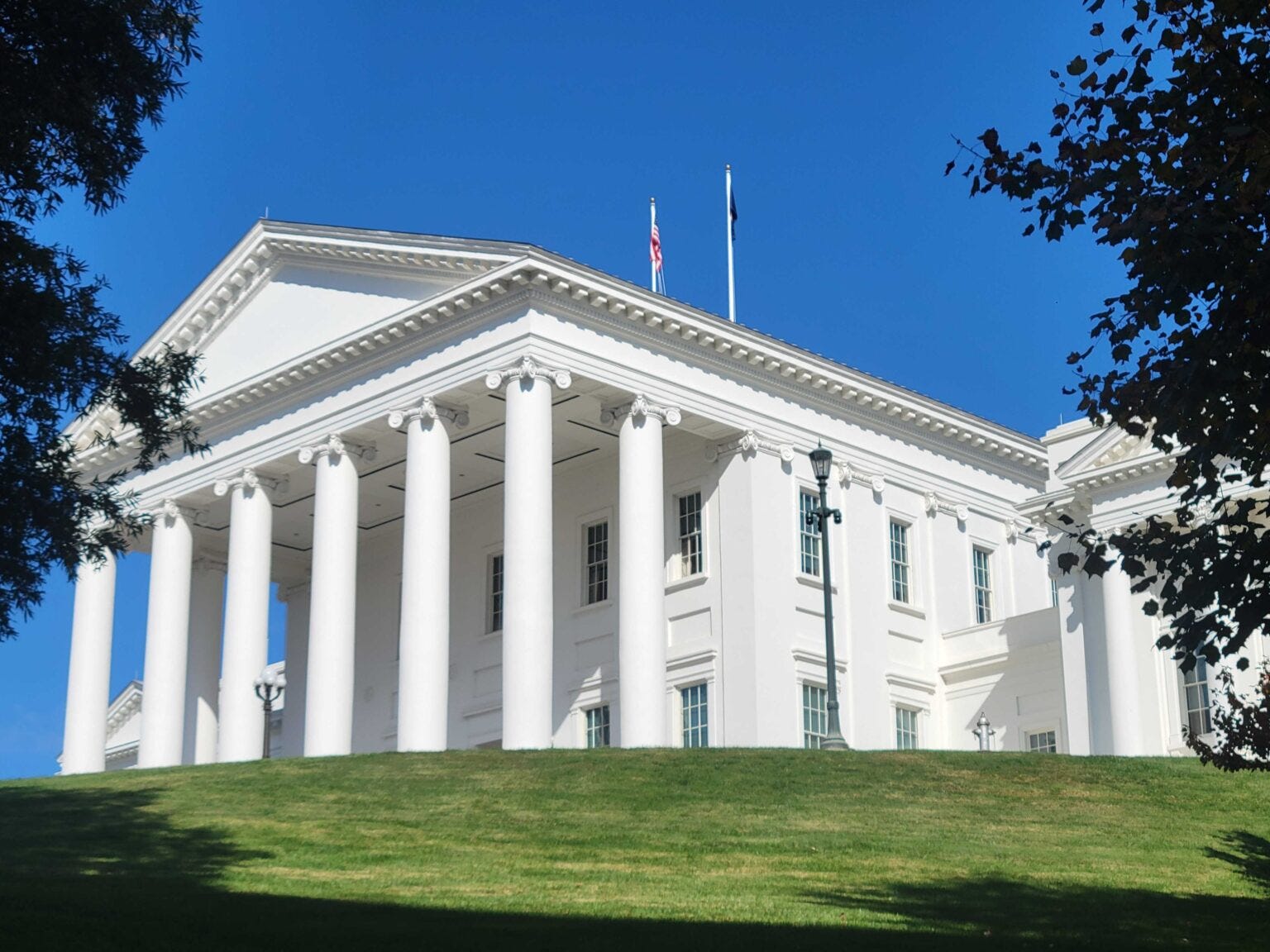
When the Virginia General Assembly gavels in Wednesday, lawmakers will face one of the most consequential and politically unusual sessions in years, with a new Democratic trifecta, four major constitutional amendments nearing the ballot, and a fresh biennial budget colliding with fiscal uncertainty and early maneuvering for the 2026 midterms.
Democrats enter this year’s session in control of the governorship, House of Delegates and state Senate for the first time since 2021, after Gov.-elect Abigail Spanberger’s November victory. They hold a narrow 21-19 majority in the Senate and a commanding 64-36 edge in the House of Delegates, positioning the party to advance much of its agenda with a governor ready to sign it.
At the top of the docket are four proposed amendments to the Virginia Constitution that, if approved again by both chambers in the coming weeks, would go before voters statewide later this year.
They would protect abortion access, enshrine same-sex marriage, automatically restore voting rights to felons who have completed their sentences and allow a rare mid-decade redistricting ahead of the 2026 congressional elections.
The session will also set the stage for negotiations over a new $212 billion biennial state budget, introduced last month by outgoing Republican Gov. Glenn Youngkin, that will likely see significant changes as it moves through the Democratic-controlled body.
“This is not a normal opening act for a legislative session,” said Stephen Farnsworth, a political scientist at the University of Mary Washington. “Spanberger is setting the stage for an aggressive year one.”
The four constitutional amendments loom large because the governor has no formal role in approving or vetoing them. Each has already cleared the legislature once and must pass again before heading to the ballot.
Two — the same-sex marriage and voting rights amendments — advanced last session with bipartisan support, reflecting a political shift on issues that once divided the chambers sharply.
The proposed abortion amendment, by contrast, drew opposition from every Republican lawmaker, after years in which GOP leaders explored abortion limits or near-total bans.
Democrats have argued the measure is necessary to lock in protections as Virginia remains the least restrictive state on abortion in the South.
The redistricting amendment is perhaps the most controversial.
It would permit lawmakers to redraw congressional lines mid-decade, a move prompted by President Donald Trump urging Republican-led states to gerrymander in their favor ahead of the 2026 midterms, with Democratic states signaling they may respond in kind. Critics warn it could further politicize redistricting, while supporters say it is a defensive necessity.
The state budget may also be a sticking point.
Youngkin’s proposed two-year spending plan includes tax relief and spending increases but landed just as federal policy shifts threaten to squeeze state finances. Recent federal legislation — including the so-called One Big Beautiful Bill — reduced support for health care programs, raising questions about how much Virginia will backfill lost dollars.
“Overhanging everything that the Democratic trifecta wants to do is a significant fiscal challenge,” Farnsworth said. He warned that cuts to Medicaid and Affordable Care Act subsidies could hit rural hospitals especially hard.
Spanberger’s early cabinet appointments suggest a pragmatic approach, Farnsworth said, pulling from both the legislature and prior Democratic administrations.
“The choices suggest a ratification of her campaign’s strategy of being a more moderate Democrat,” he said, adding that could frustrate some progressive activists.
Republicans, now firmly in the minority, will have limited leverage but still have a role to play. Farnsworth sees potential bipartisan cooperation on health care impacts in Southside and Southwest Virginia and on statewide data center policy.
As debates unfold over taxes, education funding, energy infrastructure and reproductive rights, Farnsworth said one theme will cut across nearly every issue.
“The success of the next governor’s agenda will depend to a significant degree on the key campaign promise of affordability.”
Some of the proposals that The Mercury will be tracking in the next 60 days:
Cannabis
Adult-use cannabis retail is poised to come to Virginia this year after Spanberger pledged to sign legislation creating a regulated market, reversing repeated vetoes by Youngkin.
The proposal, still being finalized, would establish a statewide retail licensing system, prioritize small and independent businesses, eliminate local opt-out provisions and strengthen testing, zoning and public safety requirements, setting the stage for legal sales to begin later in 2026.
House Bill 26, sponsored by Del. Rozia Henson, D-Woodbridge, would create a process for people convicted of certain marijuana-related felonies before July 1, 2021 to receive an automatic court hearing to consider modifying their sentences.
The bill would apply to individuals who remain incarcerated or on community supervision as of July 1, 2026, and would sunset July 1, 2029. A companion bill has been filed in the Senate.
Child care
As 88% of Virginia employers report worker lateness or absences due to child care shortages, with high costs and limited access hurting hiring and retention, lawmakers are expected to file new child care bills this month.
Sen. Lashrecse Aird, D-Petersburg, introduced Senate Bill 3 to create an Employee Child Care Assistance Program that would provide state matching funds to employers helping cover workers’ child care costs. Del. Adele McClure, D-Arlington, is carrying a similar proposal across the hall, House Bill 18.
Sen. Mamie Locke, D-Hampton, has also filed SB 20 to expand eligibility for Virginia’s Child Care Subsidy Program by raising income limits.
Data centers
With more than 500 data centers now operating across Virginia, lawmakers will grapple with how the facilities are powered and who bears the cost. Proposals under consideration would increase oversight of high-load customers, primarily data centers.
House Bill 155, carried by Del. Josh Thomas, D-Prince William, would require State Corporation Commission review and approval before such customers are connected to the grid, and lawmakers are also debating whether data center operators should more directly fund generation projects or transmission lines.
Environmental groups are also pressing for changes to Virginia’s data center tax incentive.
While most lawmakers remain reluctant to repeal the incentive, which forgoes nearly $1 billion a year in revenue, some are considering adding requirements companies must meet to qualify.
Education
For years, local governments have said they need more revenue to support their school divisions, but proposals to create new local taxes have drawn opposition from Republicans, including Youngkin.
Sen. Jeremy McPike, D-Prince William, has reintroduced Senate Bill 66, which would allow localities to levy an additional local sales and use tax of up to 1% for public school capital projects, subject to voter approval.
Lawmakers are also advancing proposals aimed at supporting teachers and school staff.
Democratic Virginia Beach Del. Michael Feggans’ House Bill 31 would create a supplemental pay program for experienced, fully licensed teachers working in schools with persistent vacancies. SB 61, sponsored by Sen. Tammy Mulchi, R-Mecklenberg, would offer financial incentives to school psychologists who earn national certification and expand eligibility under an existing state program.
Both proposals would require funding approval, though cost estimates have not yet been released.
House Education Committee Chair Sam Rasoul, D-Roanoke, is also carrying HB 92, which would update school staffing ratios for teachers, librarians and counselors.
Several bills address student well-being and access to services.
Sen. Barbara Favola, D-Arlington, has filed Senate Bills 33 and 39 to expand allowable supports for at-risk students and study how schools can better use technology to support student safety and mental health.
Sen. Danica Roem, D-Manassas, has reintroduced Senate Bills 4 and 42 to expand access to school meals and address meal debt. SB 4 and its companion, HB 96, would make school breakfast free for all students, while SB 42 aims to prevent penalties tied to unpaid meal balances.
Lawmakers will also consider changes to student assessment and classroom rules. SB 16, filed by Sen. David Suetterlein, R-Roanoke County, would extend a temporary option allowing alternate assessments, while HB 36 by Del. Joshua Cole, D-Fredericksburg, would allow larger sixth-grade ensemble music classes.
In higher education, Feggans’ HB 56 would expand eligibility for free tuition under the Virginia Military Survivors and Dependents Education Program, with costs falling to institutions.
As of Jan. 3, no bills had been filed to change how governors appoint members to governing boards at Virginia’s public colleges and universities, a flashpoint in the state’s higher education landscape for much of last year, culminating in a court battle between lawmakers and Youngkin’s administration. Spanberger is expected to fill multiple vacancies after taking office Jan. 17.
Elections and voting
Lawmakers have filed several election-related bills aimed at campaign finance transparency, voting rights and election administration.
House Bill 44, sponsored by Del. Paul Krizek, D-Fairfax, would require the Department of Elections to create a searchable, sortable public interface for campaign finance reports, allowing users to filter, export and analyze data on candidates, committees, contributors and spending.
Sen. Barbara Favola, D-Arlington, is carrying two key measures.
Senate Bill 34 would clarify that a finding of incapacity in guardianship or conservatorship proceedings does not automatically disqualify a person from voting, requiring a specific court finding that the individual lacks the capacity to understand the act of voting.
Favola’s SB 58 would extend the deadline for receiving absentee ballots and related materials from noon to 5 p.m. on the third day after an election.
Sen. Aaron Rouse, D-Virginia Beach, introduced SB 52, which would expand the 90-day “quiet period” for voter list maintenance to all primary and general elections and extend timelines for registrars and voters responding to cancellation notices.
A House companion, HB 28, has also been filed.
Sen. Schuyler VanValkenburg, D-Henrico, filed SB 76 to move all primaries in presidential election years to the presidential primary date, allow earlier collection of petition signatures and adjust campaign finance deadlines accordingly.
HB 51, sponsored by Del. Rob Bloxom, R-Accomack, would allow some localities to reverse recent moves to November elections and return to holding local elections in May, potentially resulting in multiple election dates in a single year.
Energy
Spanberger has made energy efficiency and affordability central to her first legislative session, including plans to rejoin the Regional Greenhouse Gas Initiative and restore funding for weatherization projects.
If those funds return to the Resilient Virginia Revolving Fund, bills such as House Bill 214 would support local flood resiliency grants.
Spanberger is also backing expanded solar and energy storage. Legislation reintroduced by Del. Rip Sullivan, D-Fairfax, would revise the Virginia Clean Economy Act to increase utility energy storage requirements and ease regulatory barriers.
Other proposals she supports would give the State Corporation Commission more authority to review grid efficiency and limit unnecessary transmission line construction.
Environment
Concerns about PFAS, or “forever chemicals,” contaminating Virginia waterways are prompting new legislative attention.
Lawmakers are considering measures to require testing of biosolids used as fertilizer, a known pathway for PFAS contamination. Senate Bill 138 would require PFAS testing at wastewater treatment facilities and could lead to limits on allowable levels.
Debate over menhaden, a key forage fish, will also be revived, as environmental groups again call for a Chesapeake Bay–specific population study amid concerns about low fish numbers and broader ecosystem impacts.
Separately, Virginia has signed a renewed Chesapeake Bay Watershed Agreement, committing the state to pollution reduction benchmarks, expanded education efforts and continued funding to help farmers reduce runoff into the bay.
Guns
As they did in 2020, Democrats are using their control of state government to advance a new slate of gun control legislation this session.
House Bill 217, re-introduced by Del. Dan Helmer, D-Fairfax, would ban the importation, sale, manufacture, purchase and transfer of assault firearms and large-capacity ammunition feeding devices, with limited exceptions.
Violations would be Class 1 misdemeanors, with convictions triggering a three-year ban on firearm possession. The bill would also prohibit anyone under 21 from possessing or transferring an assault firearm.
Sen. Jennifer Carroll Foy, D-Prince William, sponsored Senate Bill 27 to establish standards of responsible conduct for firearm industry members, requiring safeguards to prevent unlawful sales and misuse.
The bill would allow civil enforcement actions by the attorney general, local prosecutors or injured individuals.
Favola filed SB 38 to tighten firearm transfer rules for people subject to protective orders or convicted of domestic assault, adding age, residency and reporting requirements to ensure firearms are relinquished.
HB 106, sponsored by Del. Jason Ballard, R-Giles, would lower fees charged by local law enforcement for processing concealed handgun permit applications.
Health care
A right-to-contraception bill vetoed last year is back as House Bill 6.
Republicans had argued they might have supported the measure if it more closely resembled a Tennessee law that acknowledges a right to contraception without creating a legal entitlement. Virginia’s version passed the legislature but was vetoed by Youngkin.
Del. Cia Price, D-Newport News, who is again carrying the bill, has said it would protect access to contraception if federal protections are rolled back. The proposal is also part of a broader debate occurring alongside a constitutional amendment to protect abortion rights.
Lawmakers will also again consider legislation to create a Prescription Drug Affordability Board. Bills carried by Sen. Creigh Deeds, D-Charlottesville, and Del. Karrie Delaney, D-Fairfax, would establish a panel to analyze data and set payment limits on prescription drugs in state-sponsored health plans.
The proposal passed last year with bipartisan support, but was vetoed by Youngkin, who called it “noble in its intent” but raised concerns about medical innovation.
Separately, lawmakers are revisiting concerns about outdated technology used by social service workers administering SNAP and Medicaid benefits. Feggans is carrying HB 66 to spur system upgrades as agencies prepare for increased workloads tied to recent federal changes.
Housing
Housing bills vetoed by Youngkin last year could see a different outcome this session, as Spanberger has signaled support for policies aimed at housing affordability, stability and supply.
Among the measures already filed is House Bill 15, which would extend the grace period for late rent payments from five to 14 days, delaying when landlords can move to terminate a lease.
HB 4 would allow local governments to establish a first right of refusal to purchase publicly funded affordable housing developments when affordability restrictions expire.
Lawmakers are also expected to revive proposals allowing faith-based organizations to build housing on land they own, an effort that failed last year but mirrors legislation introduced in Congress by U.S. Sen. Mark Warner, D-Va.
VanValkenburg said he plans to reintroduce bills encouraging housing along certain commercial corridors and urging local governments to address affordable housing shortages — proposals that previously drew resistance over state versus local authority.
Taxes
Republican lawmakers have introduced several tax-related proposals this session, though it remains unclear if they will advance with Democrats controlling both chambers and the governor’s office.
House Bill 12, sponsored by Del. Joe McNamara, R-Roanoke County, would permanently extend Virginia’s higher standard deduction, setting it at $8,750 for single filers and $17,500 for married couples filing jointly. Under current law, those amounts are scheduled to drop sharply after the 2026 tax year.
McNamara is also carrying HB 13, which would eliminate the remaining 1% local sales tax on groceries and essential personal hygiene products beginning July 1. To offset the loss, the bill would require the state to reimburse cities and counties monthly for the forgone revenue.
Del. Tim Griffin, R-Bedford, has filed House Joint Resolution 14, a proposed constitutional amendment that would exempt one personally owned, noncommercial motor vehicle from state and local personal property taxes.
The exemption would apply only to automobiles, motorcycles and pickup trucks and would take effect only for vehicles acquired after the amendment is approved.
Griffin is also sponsoring HJ 15, which would direct the Department of Taxation to study the potential impact of repealing Virginia’s individual income tax. The study would examine broader tax reforms needed to replace that revenue and report findings to lawmakers by the start of the 2027 session.
Transportation
Transportation funding and safety are once again on the General Assembly’s agenda, with lawmakers eyeing long-term support for public transit and expanded traffic enforcement.
No bills have been filed yet, but a legislative subcommittee has discussed dedicating Virginia’s share of $460 million in new capital funding for the Washington Metropolitan Area Transit Authority starting in fiscal 2028, alongside Maryland and Washington, D.C., to stabilize service and support long-term investments.
Among the transportation measures already filed is Roem’s Senate Bill 41, to allow voluntary donations for highway safety improvements during online license or registration renewals.
Sen. Jennifer Carroll Foy, D-Prince William, reintroduced SB 31 to require two qualified workers on freight trains, with a House companion carried by Del. Bonita Anthony, D-Norfolk.
Lawmakers have also filed multiple bills expanding automated traffic enforcement and updating who can certify speed camera violations, including Senate Bills 81, 84 and 59.
Other proposals would allow single rear license plates and eliminate certain vehicle registration fees for disabled veterans or their unremarried surviving spouses.
Workforce development
Strengthening Virginia’s workforce and bolstering the worker pipeline is top of mind for legislators this year.
Sen. David Suetterlein, R-Roanoke County, introduced Senate Bill 10, which would allow 16- and 17-year-olds to participate in certain work programs if they are enrolled in registered apprenticeships or state-approved training programs, or hold required certifications or licenses.
Workforce development has long been a focus in Richmond, and Spanberger outlined plans last fall to strengthen career pathways, increase community college funding and better prepare students for emerging technologies.
More workforce-related proposals are expected as the session unfolds.
Measures on minimum wage, FOIA, child abuse, recalling delegates
Lawmakers have filed a mix of labor, transparency and social policy bills that often reflect sharp partisan divides.
Senate Bill 1, sponsored by Sen. Louise Lucas, D-Portsmouth, would raise Virginia’s minimum wage in stages to $15 an hour by Jan. 1, 2028. The bill would codify the $12.77 hourly wage set to take effect in 2026, raise it to $13.75 in 2027 and index future increases to inflation starting in 2029.
Roem introduced SB 56 to limit how much public bodies can charge for responding to records requests under the Virginia Freedom of Information Act.
The bill would cap fees based on employee pay rates, clarify notice requirements and streamline court procedures when agencies seek more time or relief from fee limits.
House Bill 158, sponsored by Griffin, would expand the legal definition of child abuse or neglect to include cases in which a parent or guardian attempts to transition a child to a sex or gender other than the child’s “biological sex.”
Del. Lee Ware, R-Powhatan, filed HB 8, which would set rules for selecting and overseeing Virginia delegates to a potential constitutional convention under Article V of the U.S. Constitution.
The bill would allow lawmakers to recall delegates, require them to follow legislative instructions, and impose criminal penalties for exceeding their authority.


Local Obituaries
To view local obituaries or to send a note to family and loved ones, please visit the link that follows.

Support Award-winning, Locally Focused Journalism

The FXBG Advance cuts through the talking points to deliver both incisive and informative news about the issues, people, and organizations that daily affect your life. And we do it in a multi-partisan format that has no equal in this region. Over the past year, our reporting was:
First to break the story of Stafford Board of Supervisors dismissing a citizen library board member for “misconduct,” without informing the citizen or explaining what the person allegedly did wrong.
First to explain falling water levels in the Rappahannock Canal.
First to detail controversial traffic numbers submitted by Stafford staff on the Buc-ee’s project
Our media group also offers the most-extensive election coverage in the region and regular columnists like:
And our newsroom is led by the most-experienced and most-awarded journalists in the region — Adele Uphaus (Managing Editor and multiple VPA award-winner) and Martin Davis (Editor-in-Chief, 2022 Opinion Writer of the Year in Virginia and more than 25 years reporting from around the country and the world).
For just $8 a month, you can help support top-flight journalism that puts people over policies.
Your contributions 100% support our journalists.
Help us as we continue to grow!


This article is published under Creative Commons license CC BY-NC-ND. It can be distributed for noncommercial purposes and must include the following: “Published with permission by FXBG Advance.”