


Misuse of Force
By Michael O’Keefe, ADVANCE CONTRIBUTOR
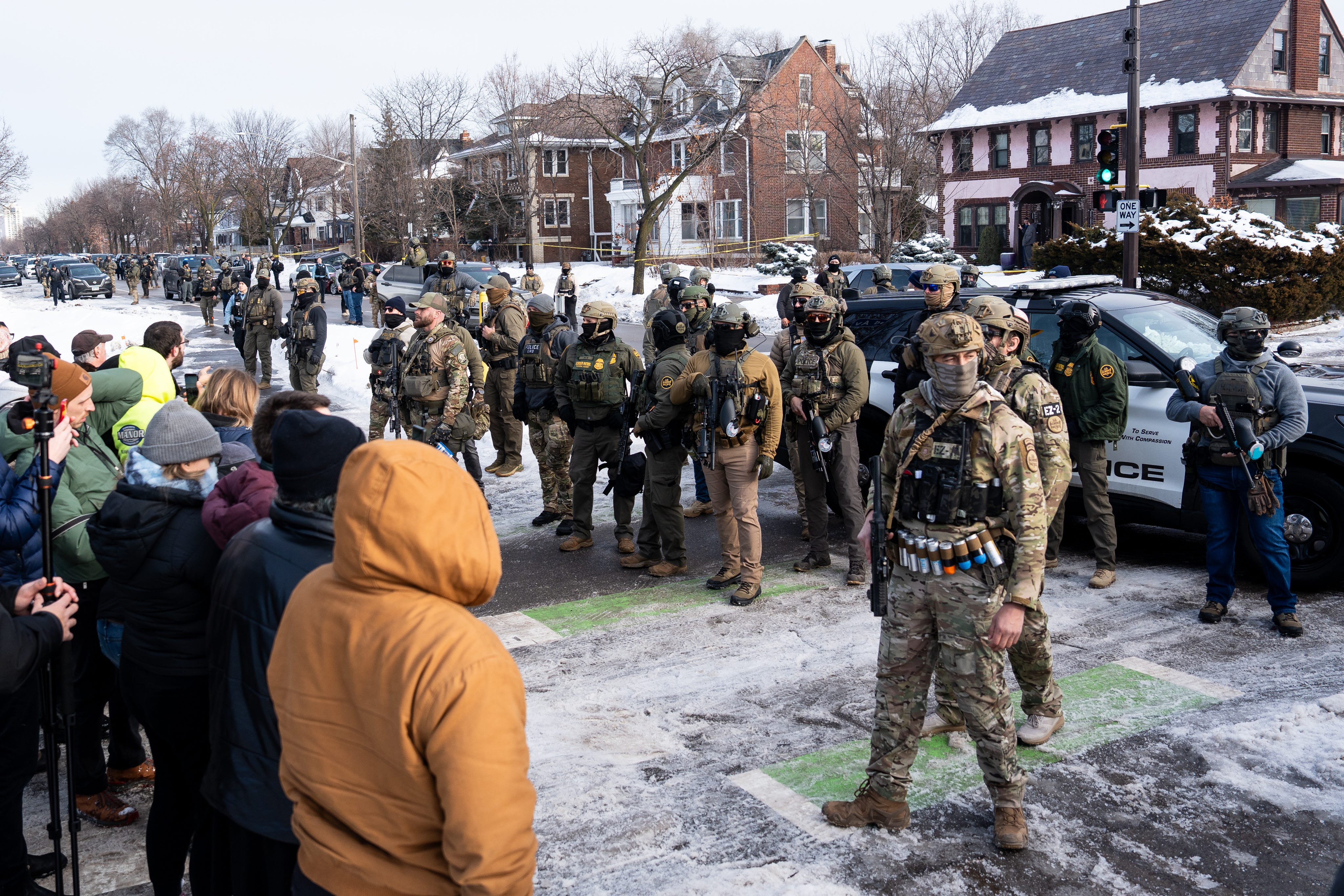
As a former police officer and attorney, I wrote this essay not long after two United States citizens—Renee Nicole Good and Alex Pretti—were shot and killed in Minneapolis by federal law enforcement agents during domestic law enforcement operations in the United States. Initially, the feds denied any wrongdoing and cast blame on the victims. They also implied, or said outright, that the federal actors involved had enhanced powers beyond those of civilian police officers. None of these claims were true. Videotape evidence laid bare the factual lies. And our Constitution, Bill of Rights, and case law guide and empower statutes, codes, and policies that govern ALL domestic law enforcement conduct, including conduct involving the use of force.
Just this past week, two more people were stopped and killed by ICE agents, both under disputed and controversial circumstances, one in Houston, and one in Maine.
Read the full article
Summer Harvest (After the Rabbits, Raccoons, Deer, Groundhogs, and Foxes Get Done with It)
By Donnie Johnston, ADVANCE COLUMNIST

It’s harvest time.
No more walking behind a plow, pulling weeds or chopping with a hoe. Now all I do is pick, can, freeze and eat off the bounty of the land.
The beans are done. I canned about 70 quarts and 30 pints and gave some to a friend to freeze. Then I turned the patch over to a neighbor, and she and her four teenage daughters picked what was left, about 20 gallons in two separate pickings.
Yes, the teenage girls actually picked, a rarity in this day and time.
Read the full article
Where We Agree—and Why It Matters for America’s Future
By Phil Huber, ADVANCE COLUMNIST
For nearly 250 years, we have lived under a Constitution that challenges us to build “a more perfect Union.” We have not always lived up to that challenge, but we have done enough to be proud of: preserving the republic through civil war and depression, expanding civil rights to people long denied them, and building institutions that helped defeat fascism and contain nuclear war. That long record is a reminder that when we pull together, we can do big things.
Today, though, we are at risk of forgetting that shared story. Our politics often tell us that we are hopelessly divided, that the “other side” is our enemy, and that compromise is weakness. If we keep thinking and acting that way, the unintended consequences could be severe: a slow decline in our democracy, weakened institutions, and a nation less able to face threats that don’t care what party we belong to.
Read the full article
New News from Around the State
VaNews/VIRGINIA PUBLIC ACCESS PROJECT
Virginia ends year with extra $936 million for state budget
By MICHAEL MARTZ, Richmond Times-Dispatch (Subscription Required)
Virginia has nearly $1 billion more to spend in the new two-year budget than expected, as state tax collections rose $350 million higher than the new revenue forecast that Gov. Abigail Spanberger delivered just six weeks ago. The state ended the fiscal year with $936.3 million more in the bank on June 30 than predicted last fall and $2 billion more than a year ago, as income and sales tax collections continue to surge despite a declining labor force and persistent inflation.
Data Centers to Add Billions in Power Costs in 13 States, Including Virginia
By IVAN PENN, New York Times (Metered Paywall - 1 to 2 articles a month)
PJM, the nation’s largest electrical grid operator, on Tuesday released results of an electricity auction that would add $6.3 billion in costs to the bills of millions of households and businesses within the next three years, an increase driven by the power demands of data centers. During the annual auction, power companies supplied prices that they were willing to accept to supply electricity to PJM at times of peak demand. Those prices are then factored into the electricity rates that are eventually charged to the grid’s customers in 13 Eastern states and the District of Columbia.
Judge dismisses challenge to reproductive rights amendment
By EMMA MALINAK, Cardinal News
A Campbell County judge on Tuesday dismissed a case that challenged Virginia’s pending reproductive rights amendment. Those who challenged the amendment said they plan to appeal. In February, the General Assembly passed and Gov. Abigail Spanberger sent onto voters a proposed reproductive freedom amendment to the state constitution that will be one of three proposed amendments on the fall ballot. If a majority of voters approve the amendment, it would take effect in 2027 and would protect Virginians’ right to make and carry out decisions relating to contraception, fertility treatments, childbirth and abortion in most instances. The other two amendments would enshrine the right to a same-sex marriage and automatically restore civil rights to felons once they have served their time.
Will a new Virginia law boost energy storage?
By ELIZABETH MCGOWAN, Virginia Center for Investigative Journalism
For Virginia to comply with a bold, electric-grid-enhancing law mandating a gigantic increase in energy storage resources by 2045, utilities and developers must get cracking. And it’s equally essential, clean power proponents say, that local governments temper neighborhood revolts such as the one that erupted last month at the Chesapeake Planning Commission. Builders of a 150-megawatt, lithium-ion phosphate battery storage facility proposed for the city’s south side were caught off guard June 10 when the Planning Commission rejected it on a 7-1 vote.
How Virginia leaders say they are working to strengthen and depoliticize public college governing boards
By NATHANIEL CLINE, Virginia Mercury
Even after being ousted as the Virginia Military Institute’s first Black superintendent last summer, retired Major General Cedric Wins said Monday at a higher education-focused conference in Washington D.C. that by helping to examine and improve governing boards for Virginia’s public colleges and universities on a state commission, he is committing another act of service. That decision at VMI galvanized legislators’ focus over the past year and a half on protecting Virginia’s public institutions from partisan influence in appointing members to governing boards. The state’s college board scrutiny also follows federal investigations at two of its institutions.


This article is published under Creative Commons license CC BY-NC-ND. It can be distributed for noncommercial purposes and must include the following: “Published with permission by FXBG Advance.”